
With patients often influenced by online misinformation and AI playing a larger role in every stage of the treatment journey, today’s healthcare providers are facing more complex challenges than ever. With that in mind, Skipta surveyed 100 HCPs across 18 different specialties about what’s truly shaping care today—from the clinical and administrative burdens consuming their time, to the growing impact of patient‑led research on treatment discussions, to the role AI can realistically play in easing workload.
We caught up with Dwight Moran, Solutions Consultant at Skipta, to discuss the results and how the survey highlights areas where pharma companies can support HCPs in enhancing patient communication, as well as what the survey tells us about the current patient care landscape and AI in the patient journey.
A: I’m not surprised to hear HCPs reporting these issues, and they all have significant roots in the same core issue: low HCP face time with patients. When HCPs are only getting to talk to patients for 10-15 minutes every few months at best, it’s extremely difficult for those HCPs to establish a relationship where the HCP really feels in control of the patients’ treatment plan. Issues like whether the patient is adhering, what other information the patient is consuming and whether it is high-quality or not, and whether the patient is properly prepared for the next session are difficult to influence from the HCPs’ perspective because they have so little time with the patient. Though attempts at support programs exist and are sometimes successful, the onus often ends up mostly on the patient and the patient alone to be informed and adherent, leading to highly varied and overall worse outcomes.
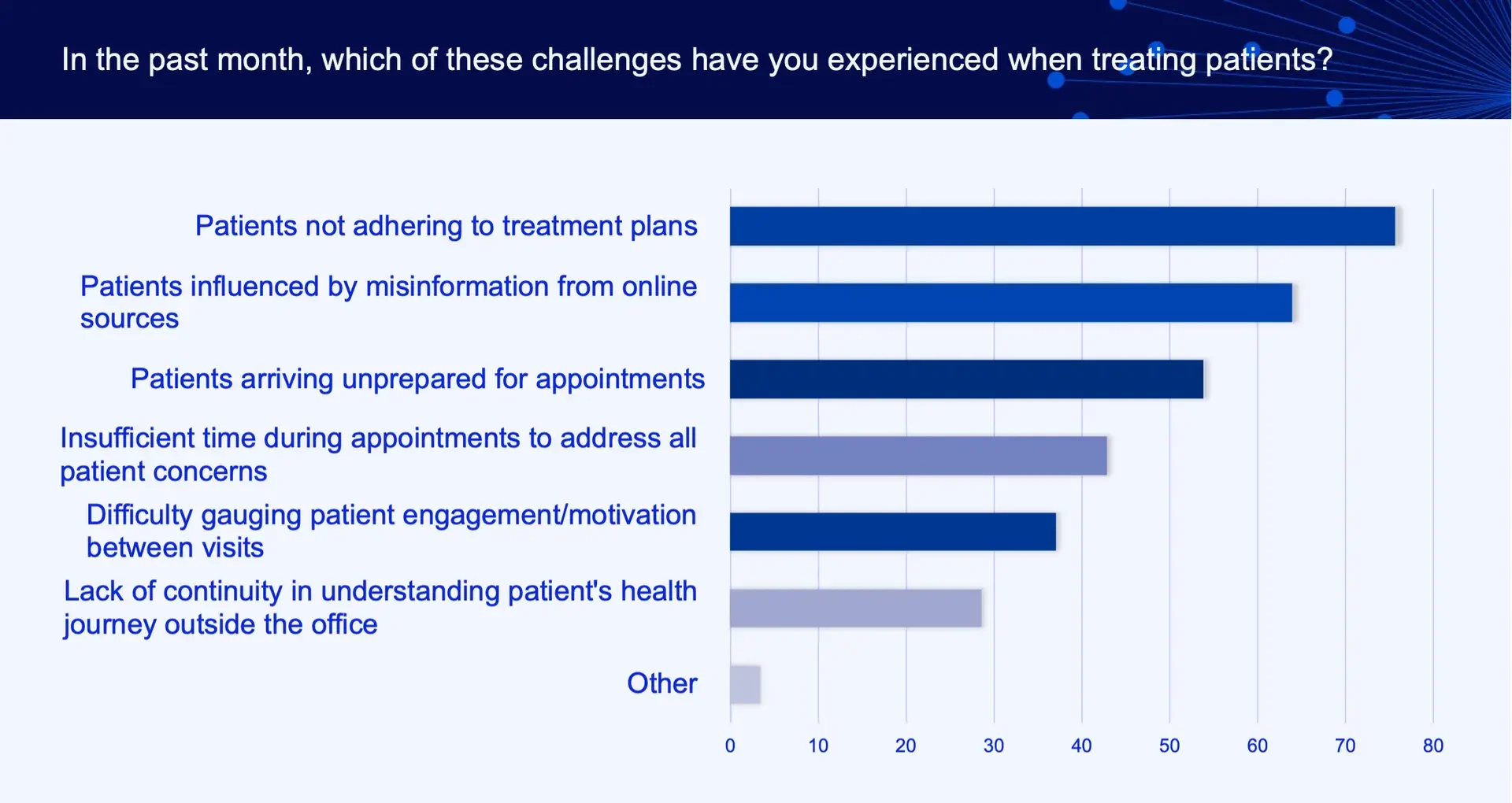
HCPs are attempting to address these challenges in a variety of ways: spending a minute at the end of the meeting making sure the patient understood their instructions, ensuring prep work such as labs and questionnaires are done ahead of the meeting, and bringing up common myths before the patient encounters them. Good post-appointment follow-up is a game changer, as HCPs can gain a lot more influence by providing strong instructions, documentation, and condition information coming out of the meeting. But ultimately, the HCP as an individual has limited influence when it comes to these topics, which is why these problems are so sticky. It’s up to the entire ecosystem to help patients stay adherent, prepared, and informed. Pharma can play its part and help HCPs here by providing patient adherence support (refill reminders, copay assistance/access relief, easier dosing), supporting good information (unbranded education), and providing conversation guides for the appointment to both HCPs and patients to improve appointments.
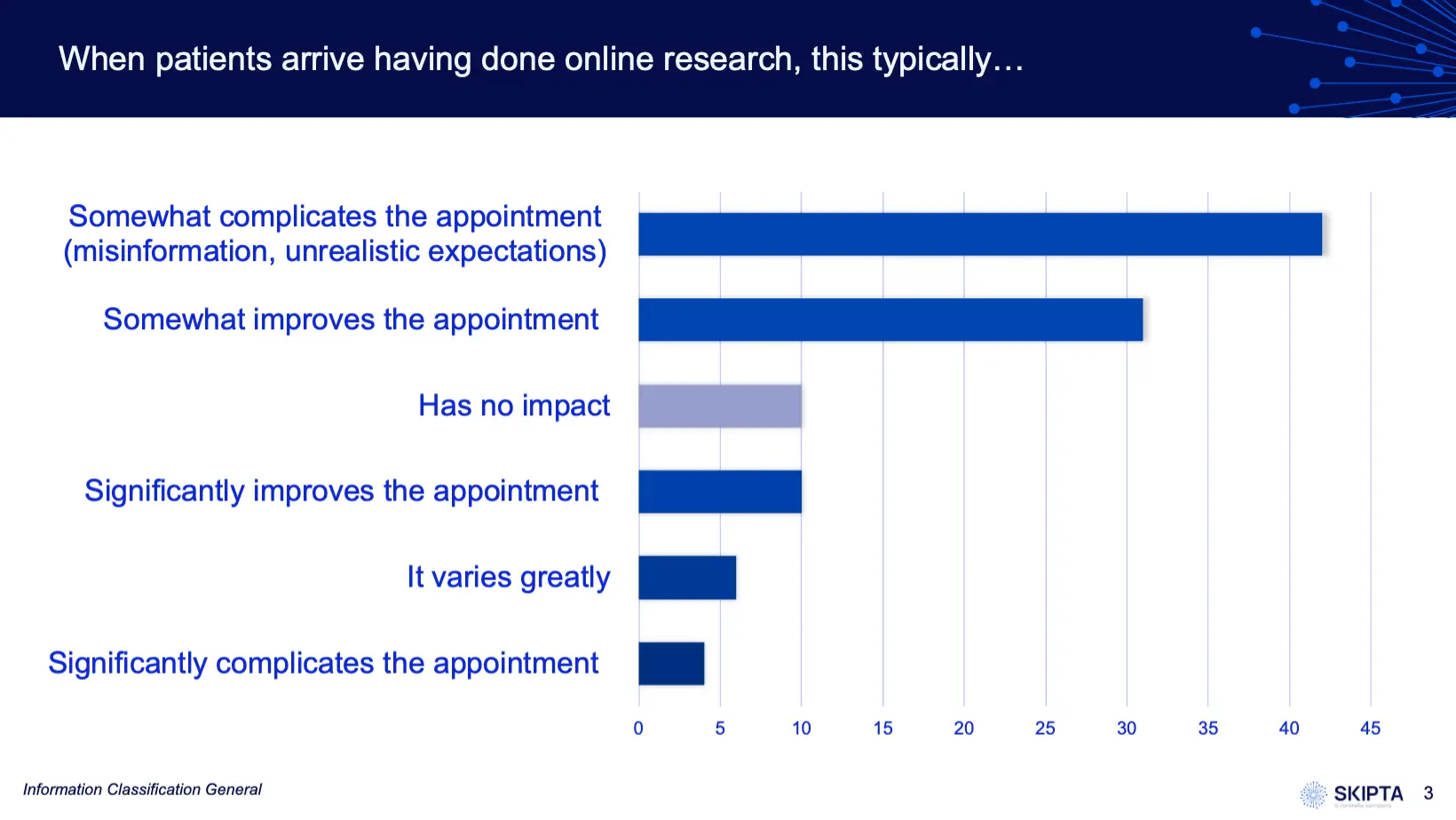
A: Online research is a blessing and a curse for patients and HCPs. The good news is, for informed and media-literate patients, the internet has provided a whole world of high-quality information that can enable patients to come to the appointment highly prepared to advocate for themselves. There is no better path to success than a well-informed and highly motivated patient who can work collaboratively on problem-solving with their HCP team. There are countless stories of patients succeeding by advocating for themselves when HCPs were unsure or incorrect about the patient’s situation due to the HCP’s limited amount of time for each case.
On the other hand, there’s also a whole world of bad information online that patients can fall into. And once patients have spent a lot of time consuming that bad information, it can be hard for HCPs to get them out of that mindset and point them to good sources in a 15-minute appointment. This provides a very challenging situation for HCPs, where they don’t want to alienate patients by arguing with them, but they can’t have a productive relationship if the patient has beliefs and expectations that aren’t accurate.
Pharma can help here through digital unbranded disease state education for both HCPs and patients, enabling all parties to have a more productive conversation.